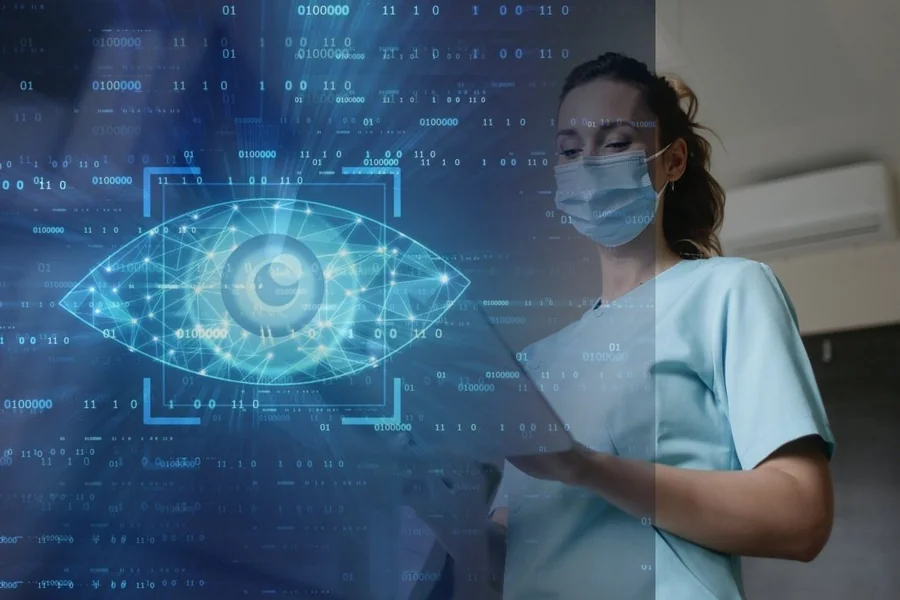
Healthcare environments generate vast amounts of visual information—radiology scans, bedside monitoring, surgical footage, and ICU activity. As medical teams try to work faster and more accurately, many providers are turning to computer vision software development services to analyse this information in real time. With hospitals facing rising workloads and strict privacy expectations, computer vision has become a practical way to support diagnostics, improve safety, and reduce manual effort.
Contents
Why Off-the-Shelf Vision Tools Fall Short in Healthcare
Generic vision tools rarely meet the precision and compliance requirements of clinical settings. Hospitals deal with:
- Highly specialised imaging formats
- Strict patient privacy and security rules
- Diverse lighting and environmental conditions
- High-stakes diagnostic decisions where accuracy matters
Because of this, custom-built visual intelligence solutions are better suited for interpreting medical scans, supporting clinical workflows, and operating safely within on-premise hospital networks.
How Computer Vision Supports Modern Clinical Care
1. Visual Diagnostics
Deep learning models can analyse MRI, CT, and X-ray images to highlight potential tumours, fractures, or anomalies. Acting as a second reader, these systems help radiologists reduce missed findings and focus attention on the most urgent cases.
2. Patient Monitoring in Critical Units
Computer vision can track patient posture, mobility, or unusual behaviour in ICUs and assisted care units. Automated alerts help prevent falls, signal when support is needed, and ensure safety protocols are followed consistently.
3. Operating Room and Workflow Support
Edge-based vision systems assist with surgical tool detection, sterile field compliance, and real-time monitoring during procedures—all without sending sensitive footage outside hospital networks.
How Healthcare-Ready Computer Vision Is Built
Developing clinical vision software requires more than standard AI development. The process typically includes:
- Collaborating with clinicians to define clinical success metrics
- Annotating medical images with specialists to ensure accuracy
- Using domain-specific augmentation to reflect varied patient populations
- Designing secure architectures for on-premise or hybrid deployment
- Building models with advanced frameworks such as ViT, CNN variants, ONNX, and medical-imaging-friendly networks
- Integrating with hospital systems like EHR, PACS, and RIS
- Testing for regulatory readiness, reliability, and bias reduction
This approach ensures models remain accurate, safe, and clinically relevant.
Impact on Healthcare Providers
Hospitals adopting custom visual intelligence systems report improvements in several areas:
- Faster diagnostic turnaround
- Reduced clinician workload for repetitive image review
- Better patient safety with automated monitoring
- Higher compliance with privacy and data-handling standards
- Adaptability to local imaging protocols and unique patient demographics
Continuous monitoring and iterative updates ensure the system becomes more accurate as more cases are processed.
Final Thoughts
Healthcare runs on precise, timely and secure information. With clinical teams stretched thin, visual intelligence offers a scalable way to support diagnostics, strengthen safety, and improve operational efficiency. By adopting custom computer vision tools designed for medical environments, providers can deliver higher-quality care while freeing clinicians to focus on what matters most—patients.